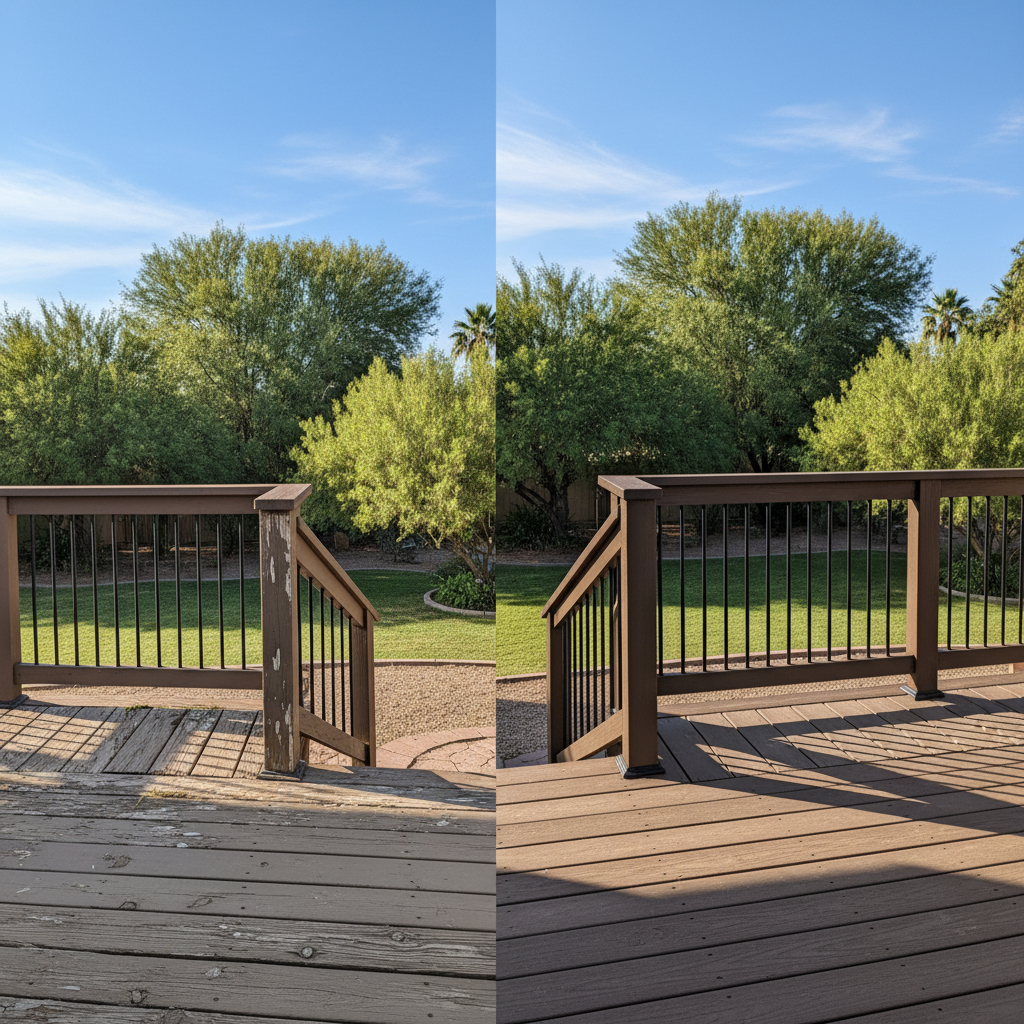
So, you're putting a new deck on your Phoenix home, or maybe you're just upgrading an old one, and suddenly you're staring at all the railing options. It's not just about what material you pick anymore; it's also about how that railing actually gets put together. For most homeowners, it really boils down to two main ways we install railings: stick-built or pre-fabricated systems. Let's dig into what each of those means for you.
What's the Difference?
When I say 'stick-built,' I'm talking about railings where we cut and assemble all the individual pieces right there on your property. Imagine a traditional wood railing: we're cutting posts, rails, and balusters on-site, fitting them together, and fastening them one by one. This approach gives us a ton of flexibility. It's kind of like tailoring a custom suit from scratch, you know?
Pre-fabricated, on the other hand, means the railing sections or panels arrive mostly assembled from the factory. We basically just attach these larger sections to your deck posts. This could be a composite panel with balusters already set, or a glass panel system, or even some metal railings that come in fixed lengths. It's more like buying a suit off the rack – maybe some minor adjustments are needed, but the core is already there.
Cost: Where Your Dollars Go
This is usually the first thing folks ask about, and it's not always a simple answer. Generally speaking, pre-fabricated systems often come with a higher upfront material cost. Those factory-built panels and specialized connectors just cost more to produce. But here's the kicker: because they're faster to install, you might actually save a bit on labor. The overall cost can sometimes balance out, but expect pre-fab to typically run a little higher, especially for premium materials like glass or certain metal systems.
Stick-built railings, particularly if you're going with pressure-treated lumber or even some composites, can have lower material costs. However, they take more time and skill to assemble on-site. Every cut, every screw, every level check takes longer, so your labor costs can be higher. For a simple wood railing, stick-built is usually the more budget-friendly option.
Durability & Maintenance in the Phoenix Heat
This is where our unique Phoenix climate really comes into play. We get intense sun, dry heat, and sometimes those crazy monsoon storms. Durability isn't just about strength; it's about how well something holds up to these conditions over years.
- Stick-Built: If you go with wood, you're looking at regular maintenance – sanding, staining, or painting every few years to protect it from UV damage and prevent splintering or warping. Even pressure-treated wood needs care, believe it or not. Composite stick-built railings are better, but they still have more individual fasteners and connection points. These could potentially loosen or degrade over time compared to a solid panel.
- Pre-Fabricated: Many pre-fab systems are built for low maintenance. Think aluminum, glass, or high-quality composite panels. These materials are inherently more resistant to our sun's harsh UV rays and don't typically need painting or staining. Less maintenance means more time enjoying your deck and less time working on it. The factory finishes are usually top-notch for weather resistance, which is a big plus.
For our desert conditions, I really lean towards materials that require minimal upkeep. That intense sun will chew up paint and stain faster than you think, especially on south-facing decks in places like Scottsdale or Paradise Valley.
Appearance & Customization
Aesthetics matter, right? You want your deck to look good and complement your home, naturally.
- Stick-Built: This is where you get maximum customization. Want a specific baluster pattern? A unique top rail profile? We can usually build it. It offers a classic, often more traditional look. If you have an older home or a very specific architectural style, stick-built can often match it better.
- Pre-Fabricated: While you're limited to the designs the manufacturers offer, these systems often provide a very clean, modern, and consistent look. Glass panels offer unobstructed views, cable railings give an industrial-chic vibe, and some composite panels have very sleek designs. The consistency from one section to the next is usually perfect because it’s factory-made. You might not get a custom curve, but you get precision and often a more contemporary feel.
My Recommendation for Phoenix Homeowners
Considering our climate and what most folks want out of their outdoor living spaces here in Phoenix, my recommendation for most deck railing projects leans towards pre-fabricated systems, especially those made from aluminum, high-quality composite, or glass.
Why? It comes down to long-term value and ease of living. The higher upfront material cost is often offset by lower labor and, crucially, significantly reduced maintenance over the life of the deck. You really don't want to be out there sanding and re-staining a wood railing every couple of years when it's 110 degrees, do you? Pre-fab systems stand up to the sun better, resist fading, and require little more than an occasional cleaning.
They also offer a fantastic modern aesthetic that many Phoenix homes are going for these days, whether it's a sleek glass railing around your pool deck or a low-maintenance composite system on your elevated patio. You get a consistent, high-quality finish that will look great for years without you having to lift a finger.
Now, if you're on a tighter budget and love the look of natural wood, a stick-built pressure-treated pine railing is still a viable option. Just be prepared for the maintenance. For most, though, the durability of a pre-fab system just makes more sense in our desert environment. We've installed plenty of both at Phoenix Deck Solutions, and we can help you figure out what's best for your specific project and budget.